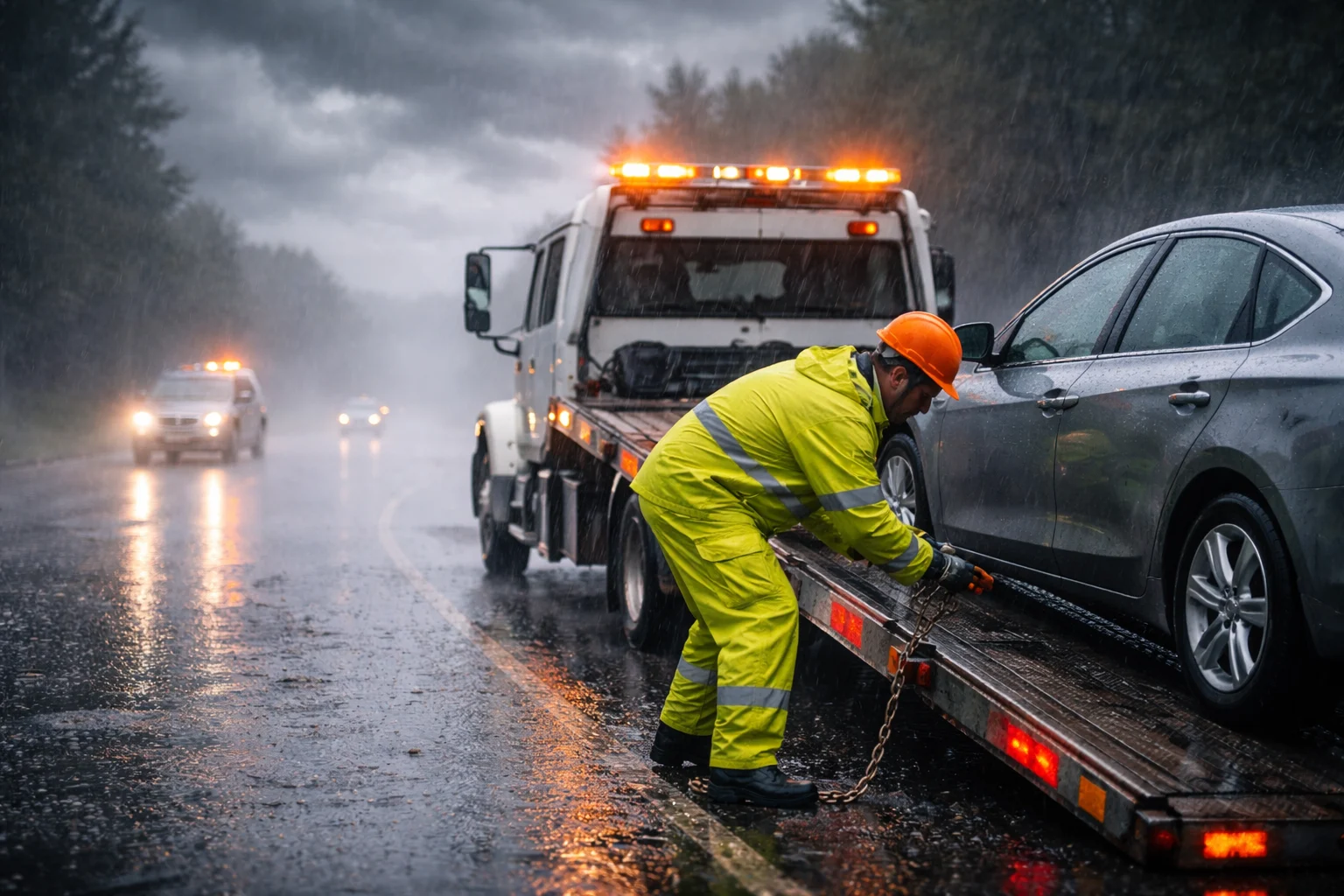
Weather plays a major role in roadside emergencies, influencing not only how often drivers need assistance but also how safely and quickly help can arrive. From heavy rain to freezing temperatures, changing conditions directly impact towing operations, response times, and overall driver safety. Understanding how weather affects towing safety helps drivers make informed decisions during stressful situations and reinforces the importance of relying on experienced professionals.
For RAPID TOWING, weather awareness is not an afterthought—it’s a core part of every operation. Professional towing teams are trained to adapt to environmental challenges while prioritizing safety, efficiency, and vehicle protection.
Why Weather Matters in Towing Situations
When weather conditions deteriorate, the risks associated with roadside incidents increase significantly. Reduced visibility, slippery roads, and extreme temperatures affect both stranded drivers and towing professionals.
Weather impacts towing in several key ways:
- Slower response times due to road conditions
- Increased accident risk at roadside locations
- Greater difficulty securing vehicles
- Higher likelihood of secondary collisions
- Increased stress for drivers waiting for help
Understanding these factors helps drivers remain patient and cautious during adverse conditions.
Rain and Ice: Increased Risks on the Road
Wet and icy surfaces are among the most dangerous conditions for both drivers and towing operators. Reduced traction and longer stopping distances make every roadside stop more hazardous.
The rain and ice towing risks include:
- Vehicles sliding unexpectedly during loading
- Difficulty positioning tow trucks safely
- Limited braking capability
- Poor visibility for passing traffic
During these conditions, even simple breakdowns can quickly escalate into dangerous situations without proper precautions.
How Storms Affect Emergency Towing Response Times
Storms create complex challenges for emergency response teams. Heavy rain, wind, lightning, and flooding can slow traffic and make certain roads temporarily inaccessible.
During severe weather, emergency towing in storms may take longer due to:
- Congested roadways
- Hazardous driving conditions
- Increased volume of service calls
- The need for additional safety measures
Professional towing companies prioritize safety over speed, ensuring that both drivers and operators are protected during extreme weather events.
Cold Weather and Winter Driving Challenges
While winters may be milder in some regions, cold temperatures still pose significant risks for vehicles and drivers. Cold weather affects mechanical systems, road surfaces, and driver reaction times.
Key winter-related challenges include:
- Reduced tire traction
- Battery failures
- Stiff steering and braking systems
- Slower vehicle response
- Increased likelihood of roadside breakdowns
These challenges make winter towing safety tips especially important for drivers navigating colder conditions.
Essential Winter Safety Practices for Drivers
Drivers can reduce risk and improve safety by preparing for cold-weather travel. Before heading out during winter months, it’s important to:
- Check tire tread and pressure
- Inspect battery health
- Keep emergency supplies in the vehicle
- Allow extra travel time
- Reduce speed on slippery roads
If a breakdown occurs, staying inside the vehicle with hazard lights on is often safer than standing on icy shoulders.
Weather’s Impact on Vehicle Recovery Procedures
Recovering a vehicle in adverse weather requires specialized training and careful planning. Rain, ice, snow, and wind all influence how a vehicle is secured and transported.
Safe recovery depends on understanding safe vehicle recovery weather conditions, such as:
- Road slope and surface stability
- Wind direction and intensity
- Traffic flow and visibility
- Vehicle position and damage level
Professional operators adjust techniques and equipment usage to ensure safe recovery without causing additional damage.

How Towing Professionals Adapt to Weather Conditions
Experienced towing teams are trained to anticipate and manage weather-related risks. Their ability to adapt quickly is essential for maintaining safety standards under pressure.
Professional operators rely on:
- Advanced training in adverse conditions
- Weather-appropriate towing equipment
- Strategic vehicle positioning
- Clear communication with drivers
- Constant situational awareness
These professional towing precautions protect everyone involved—from stranded drivers to passing motorists.
Why Response Time Can Vary During Bad Weather
Drivers often wonder why towing response times may increase during storms or hazardous conditions. Several factors contribute to these delays:
- Slower traffic flow
- Increased call volume
- Road closures or flooding
- Safety assessments before dispatch
- Limited safe access points
While waiting can be frustrating, these measures ensure that assistance arrives safely rather than risking further accidents.
What Drivers Should Do While Waiting for a Tow in Bad Weather
Waiting for help during poor weather conditions can be stressful, but taking the right steps improves safety.
Drivers should:
- Turn on hazard lights immediately
- Stay inside the vehicle if safe to do so
- Avoid standing near traffic lanes
- Keep seatbelts fastened
- Use emergency reflectors if available
- Stay in contact with the towing provider
Remaining calm and visible helps towing professionals locate and assist you more efficiently.
How RAPID TOWING Maintains Safety in All Conditions
RAPID TOWING understands that weather-related calls require extra care. Their team follows strict safety protocols designed to handle challenging environments without compromising service quality.
Their approach includes:
- Monitoring weather forecasts in real time
- Dispatching appropriate equipment for conditions
- Training operators for adverse scenarios
- Prioritizing high-risk situations
- Communicating clearly with stranded drivers
This commitment ensures reliable service even when conditions are far from ideal.
Common Weather-Related Towing Myths
Myth 1: Towing Is Too Dangerous During Bad Weather
With proper training and equipment, towing can be performed safely.
Myth 2: Faster Response Is Always Better
Safety assessments sometimes require additional time.
Myth 3: All Tow Trucks Handle Weather the Same
Different conditions require specific equipment and techniques.
Myth 4: Drivers Should Exit the Vehicle to Flag Help
In poor weather, staying inside the vehicle is often safer.
Understanding the realities of weather-related towing helps drivers make safer choices.
Conclusion
Weather conditions significantly affect towing operations, response times, and overall safety. By understanding how environmental factors influence roadside assistance and recovery, drivers can remain patient, prepared, and protected during emergencies. Trusting experienced professionals who prioritize safety ensures that help arrives responsibly—even in the most challenging conditions. With a strong commitment to preparedness and care, RAPID TOWING continues to provide dependable service when drivers need it most.