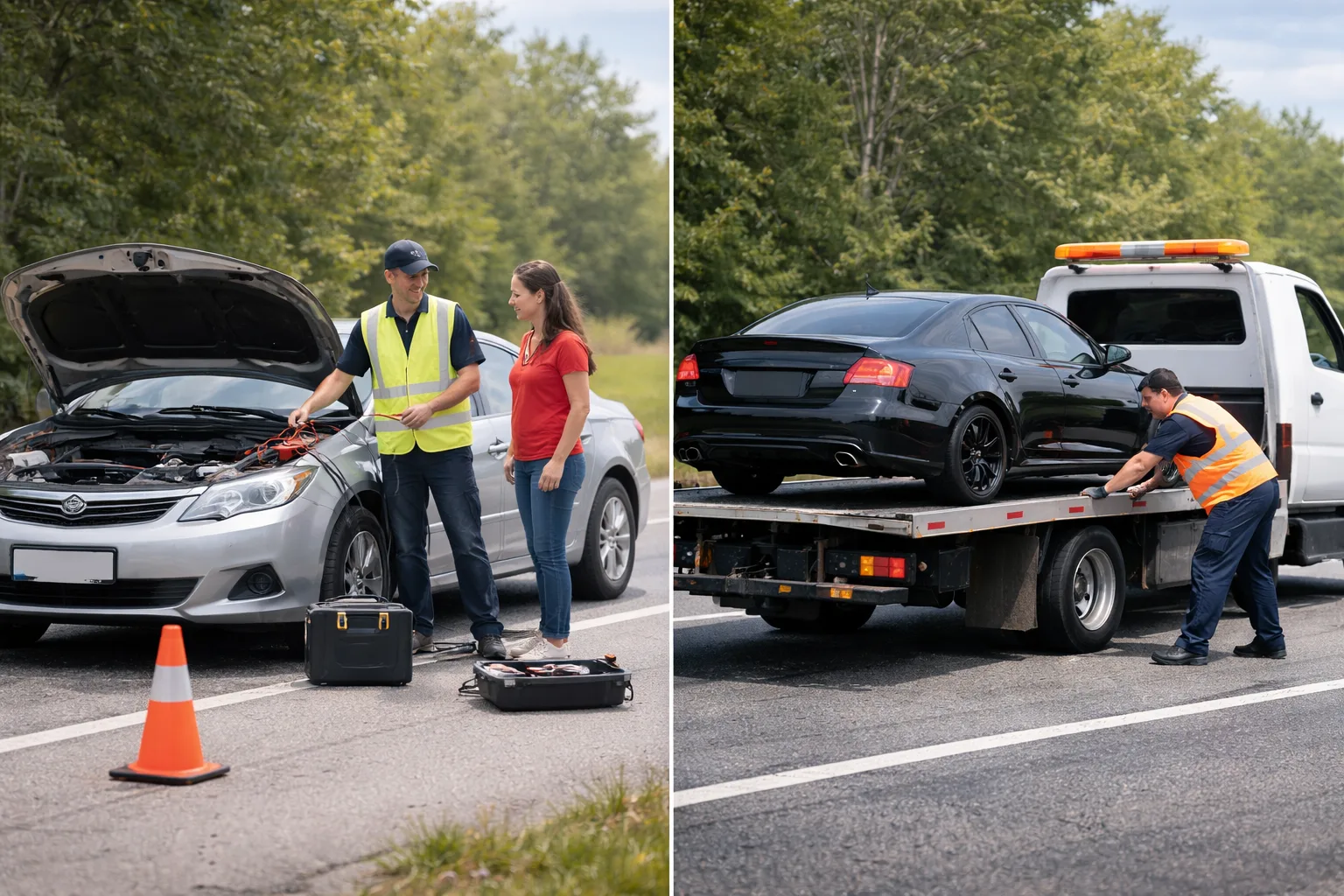
When your vehicle breaks down or something goes wrong on the road, knowing what kind of help you actually need can save time, money, and stress. Many drivers assume roadside assistance and towing are the same service, but they serve very different purposes. Understanding roadside assistance vs towing is essential for making the right call during an emergency and ensuring your vehicle receives the appropriate care.
For drivers in January—when colder mornings, increased travel, and unpredictable road conditions can affect vehicle performance—being prepared is especially important. RAPID TOWING helps drivers make informed decisions by offering both roadside support and professional towing solutions, depending on the situation.
Why Drivers Often Confuse Roadside Assistance and Towing
At first glance, both services respond to vehicle problems, arrive on the road, and aim to help stranded drivers. However, their scope and purpose are different.
The confusion often comes from the fact that roadside technicians and tow truck operators may arrive from the same company. The key difference lies in what they do once they arrive and whether your vehicle can safely remain on the road.
Understanding these distinctions ensures you request the right service the first time—reducing delays and unnecessary costs.
What Is Roadside Assistance?
Roadside assistance focuses on minor, on-the-spot vehicle issues that can be resolved quickly without transporting the vehicle elsewhere. The goal is to get you back on the road safely and as fast as possible.
Common roadside service options include simple fixes that do not require specialized repair facilities.
Typical Roadside Assistance Situations
Roadside assistance is usually the right choice when:
- Your battery dies unexpectedly
- You have a flat tire but the vehicle is otherwise safe
- You lock your keys inside the car
- You run out of fuel
- Your vehicle experiences a minor mechanical issue
In these cases, roadside professionals aim to resolve the issue immediately so you can continue driving.
What Is Towing?
Towing is necessary when a vehicle cannot be driven safely or legally. This includes situations where mechanical failure, accident damage, or safety concerns make roadside repairs impossible.
A tow truck transports your vehicle to a repair shop, dealership, storage lot, or another destination of your choice.
Understanding towing vs roadside help is critical here: towing removes the vehicle from the roadway entirely, while roadside assistance keeps it there and fixes the issue on-site.
Situations That Require Towing Instead of Roadside Assistance
Not all breakdowns can be fixed where they occur. Towing is typically required when:
- The engine fails to start after inspection
- The transmission malfunctions
- The vehicle is involved in a collision
- There are significant fluid leaks
- Steering or braking systems are compromised
- The vehicle is unsafe to operate
In these scenarios, continuing to drive could worsen damage or put you and others at risk.
Common Roadside Assistance Services Explained
To better understand when roadside help is appropriate, let’s take a closer look at some of the most common services offered.
Battery Issues
A battery jump start service is one of the most frequently requested roadside solutions. Extreme temperatures, frequent short trips, and aging batteries can all lead to sudden failures.
Flat Tires
When a tire goes flat but the rest of the vehicle is in good condition, tire change roadside assistance allows drivers to get back on the road without waiting for a tow.
Lockouts
Roadside technicians can safely unlock vehicles without damaging doors or windows.
Fuel Delivery
Running out of gas happens more often than drivers expect, especially during long trips or heavy traffic.
These services are designed to be fast, efficient, and minimally disruptive.
When Roadside Assistance Is Not Enough
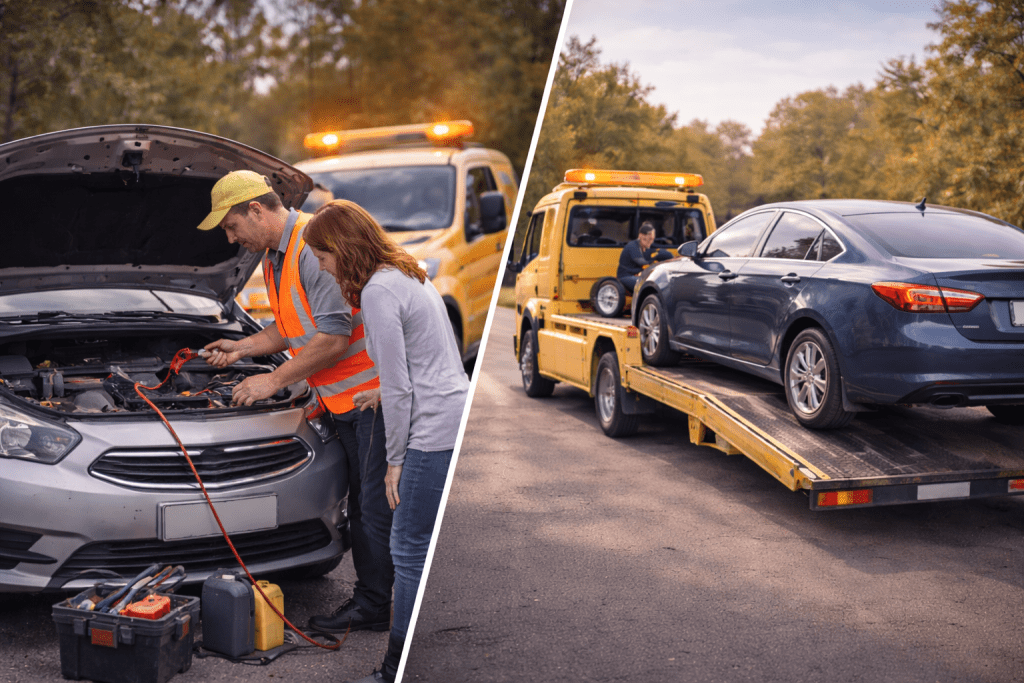
While roadside services are convenient, they have limitations. If a technician determines that a repair cannot be safely completed on-site, towing becomes the next step.
This transition protects:
- Your vehicle from further damage
- You from unsafe driving conditions
- Other motorists from potential hazards
In these cases, towing is not an inconvenience—it’s a safety necessity.
Emergency Scenarios: Which Service Should You Call?
In urgent situations, choosing the correct service matters even more. Emergency roadside services are ideal for quick, minor issues when the vehicle is safely off the road. However, emergencies involving accidents, disabled vehicles in traffic lanes, or severe mechanical failures often require towing immediately.
A professional dispatcher can help determine the appropriate response based on:
- Your location
- Traffic conditions
- Vehicle condition
- Safety risks
- Time of day
Providing accurate information when you call ensures the right equipment is sent.
Cost Considerations: Roadside Assistance vs. Towing
Many drivers worry about cost when requesting help. While roadside assistance is typically less expensive, towing provides a different level of service.
Roadside Assistance Costs
- Generally lower
- Often covered by memberships or insurance
- Ideal for minor issues
Towing Costs
- Higher due to equipment and labor
- May be covered by insurance depending on policy
- Necessary for safety and vehicle protection
Understanding the value of each service helps drivers see cost as an investment in safety rather than an inconvenience.
How RAPID TOWING Helps You Choose the Right Solution
RAPID TOWING takes a customer-first approach. Their team evaluates every situation carefully before acting, ensuring drivers receive the most appropriate service.
Their professionals:
- Ask detailed questions before dispatch
- Assess vehicle condition on arrival
- Explain available options clearly
- Prioritize safety over speed
- Avoid unnecessary towing whenever possible
This transparency builds trust and helps drivers feel confident in their decisions.
Common Myths About Roadside Assistance and Towing
Myth 1: Roadside Assistance Can Fix Anything
Some issues require specialized repairs that can only be done at a shop.
Myth 2: Towing Means Your Car Is Totaled
Many vehicles are towed for minor issues that are easily repairable.
Myth 3: You Always Know Which Service You Need
Professional assessment often determines the safest option.
Myth 4: Towing Is Only for Accidents
Mechanical failures and safety concerns frequently require towing as well.
Clearing up these misconceptions helps drivers respond calmly and appropriately.
Conclusion
Knowing the difference between roadside assistance and towing empowers drivers to make smarter, safer decisions when problems arise. While roadside services are ideal for quick fixes, towing plays a critical role in protecting vehicles that cannot be driven safely. By understanding your options and relying on experienced professionals, you reduce stress and ensure your vehicle receives the care it needs. With dependable service, clear communication, and a safety-first approach, RAPID TOWING stands ready to help—no matter what the road brings.